Suitable for
Projects that match this page decision
- Buyers who know daily or shift saleable-bottle demand
- Projects comparing required output with published 500 ml reference bands
- Teams that can state net production hours and planning assumptions
Requirement definition / demand-to-BPH calculation
Calculate required filling-machine BPH from daily good-bottle demand and available hours, with explicit efficiency and growth assumptions.
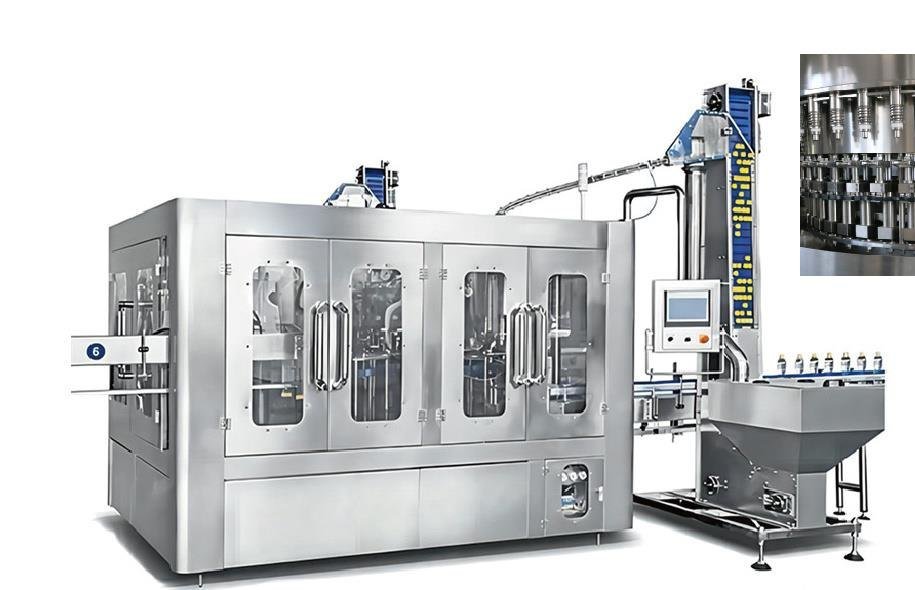
Divide daily saleable bottles by net scheduled production hours and the remaining planning-efficiency factor. Apply growth reserve separately. Deduct planned non-running time when defining the hours; the efficiency factor must cover only losses not already deducted.
Calculation worksheet / visible assumptions
Use one equation and keep every input visible: required BPH = saleable bottles ÷ net production hours ÷ planning efficiency. Apply growth reserve as a separate final step.
| Worksheet line | Illustrative value | How to use it |
|---|---|---|
| Saleable daily demand | 80,000 bottles | Use good bottles required, not total attempted production. |
| Net production time | 16 hours | Exclude planned non-running time before the calculation. |
| Planning efficiency | 80% buyer assumption | Use a documented planning input; it is not a machine promise. |
| Preliminary requirement | 80,000 ÷ 16 ÷ 0.80 = 6,250 BPH | Carry the exact bottle basis with the result. |
| Growth reserve | 15% buyer scenario | 6,250 × 1.15 = 7,188 BPH; compare the next documented reference band. |
Reference values require project-specific confirmation. The example demonstrates the method only. Buyer demand, efficiency and reserve must be replaced with project inputs.
Capacity planning
Required BPH = daily saleable bottles ÷ (net hours × remaining efficiency) × growth factor.
Subtract planned breaks and changeovers from hours first. Efficiency covers only losses not already deducted. Count each loss once; 500 ml catalog ratings do not establish the speed of another bottle format.
Projects that match this page decision
Boundaries that need a different platform or review
Evidence to provide before confirmation
What happens at this machine or decision boundary
Options that must appear in the proposal
Upstream, downstream and utility handovers
Questions to close before order
How to verify the agreed basis
What the commercial offer should state
Divide daily saleable bottles by net scheduled production hours and the remaining planning-efficiency factor. Apply growth reserve separately. Deduct planned non-running time when defining the hours; the efficiency factor must cover only losses not already deducted.
Illustrative assumptions: 8 net hours, 80% remaining planning efficiency and 10% growth reserve. The requirement is 48,000 ÷ (8 × 0.80) × 1.10 = 8,250 BPH. These are buyer planning assumptions, not a tested machine performance claim.
No automatic conversion is reliable. Larger fill volume, bottle geometry and transfer behavior can change output. Ask for a separate sustained good-bottle rate for every required format, measured with the approved cap and agreed FAT conditions.
Related decision
Calculate preliminary required BPH from daily saleable bottles, net hours, planning efficiency and growth reserve, then compare an XGF reference band.
Allot Tech / water-filling-machine-capacity-calculation
Send the bottle, cap, reference output, existing equipment and destination. Final values are confirmed in the project proposal.
Mr Kcal
Allot Tech (Suzhou) Co., Ltd.