Suitable for
Projects that match this page decision
- Early-stage machine sizing with known daily demand
- Comparing the reserve included in different proposals
- Preparing an RFQ before a final model is selected
Tool / daily output to preliminary BPH
Required BPH should be calculated from saleable daily demand and realistic net production time, not chosen from a supplier table in isolation.
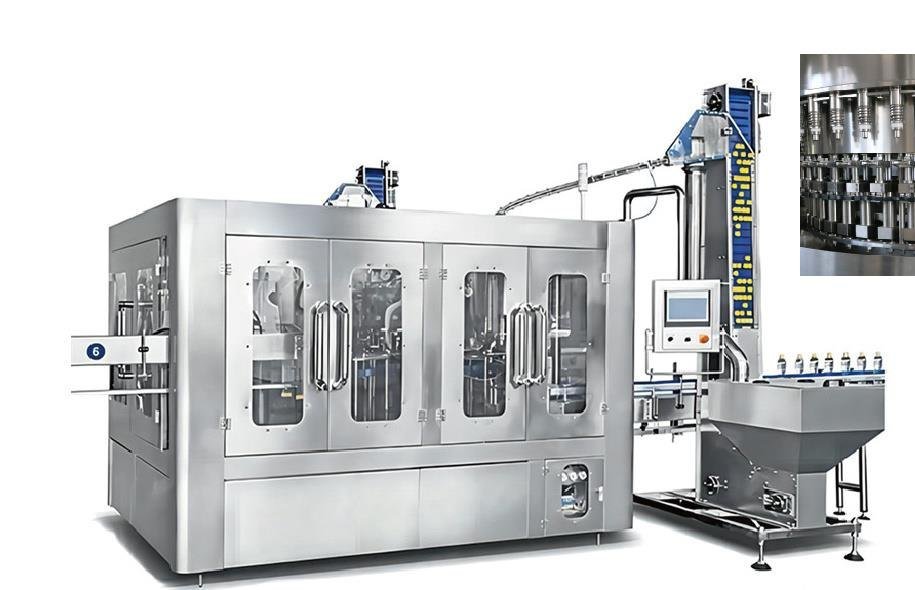
Enter daily saleable bottles, net operating hours, planning efficiency and growth reserve. The result is a preliminary machine requirement. The final model still depends on the reference bottle, larger-format speed, cap, line balance and FAT method.
Selection gates / calculated need to reference band
Pass the calculated requirement through format, reserve, footprint and acceptance gates before choosing a catalog reference.
| Selection gate | Question to close | Result carried forward |
|---|---|---|
| Required output | What saleable BPH and calculation assumptions are approved? | Controlled demand basis |
| Bottle basis | Which SKU defines the reference and which may derate it? | Format schedule and samples |
| Reference band | Which published 500 ml band is at or above the requirement? | Preliminary XGF comparison |
| Operational reserve | Is the margin defensible without double-counting? | Buyer-approved reserve case |
| Physical fit | Do dimensions, access and interfaces suit the site? | Layout and handover actions |
| Acceptance | How will project output be confirmed? | Written FAT basis |
Reference values require project-specific confirmation. The selector identifies a preliminary band; it does not issue a performance guarantee.
Capacity planning
Required BPH = daily saleable bottles ÷ (net hours × remaining efficiency) × growth factor.
Subtract planned breaks and changeovers from hours first. Efficiency covers only losses not already deducted. Count each loss once; 500 ml catalog ratings do not establish the speed of another bottle format.
Reference selector
| Reference model | Output | Machine size | Weight | Machine power |
|---|---|---|---|---|
| XGF14-12-5 | 6,000 BPH | L2360 × W1770 × H2700 mm | 2,800 kg | 2.42 kW |
| XGF16-16-5 | 8,000 BPH | L2760 × W2060 × H2700 mm | 3,800 kg | 3.12 kW |
| XGF24-24-8 | 13,000 BPH | L2800 × W2230 × H2700 mm | 4,800 kg | 3.92 kW |
| XGF32-32-8 | 16,000 BPH | L4215 × W2960 × H2700 mm | 5,800 kg | 4.92 kW |
| XGF40-40-12 | 18,000 BPH | L4360 × W3300 × H2700 mm | 6,800 kg | 7.30 kW |
| XGF50-50-15 | 24,000 BPH | L5900 × W4123 × H2700 mm | 8,600 kg | 7.87 kW |
| XGF60-60-15 | 30,000 BPH | L5770 × W5288 × H2700 mm | 10,800 kg | 11.00 kW |
| XGF72-72-18 | 36,000 BPH | L6540 × W4900 × H2700 mm | 12,800 kg | 11.40 kW |
| XGF80-80-18 | 42,000 BPH | L7800 × W6380 × H2700 mm | 15,000 kg | 15.37 kW |
Published container basis: 500 ml; bottle height 170-320 mm; bottle diameter 50-115 mm; published container range 500-2000 ml.
Projects that match this page decision
Boundaries that need a different platform or review
Evidence to provide before confirmation
What happens at this machine or decision boundary
Options that must appear in the proposal
Upstream, downstream and utility handovers
Questions to close before order
How to verify the agreed basis
What the commercial offer should state
Daily saleable bottle target. Net operating hours after planned stops. Planning efficiency as a decimal or percentage. Growth reserve and main bottle volume.
Daily demand and calculation basis. Reference container and model band. Guaranteed or acceptance output wording. Interface responsibilities and FAT method.
Use the agreed reference bottle and cap. Record continuous running time, stops and saleable output. Separate machine-caused losses from external starvation or blockage.
Related decision
Calculate preliminary required BPH from daily saleable bottles, net hours, planning efficiency and growth reserve, then compare an XGF reference band.
Allot Tech / capacity-model-selection
Send the bottle, cap, reference output, existing equipment and destination. Final values are confirmed in the project proposal.
Mr Kcal
Allot Tech (Suzhou) Co., Ltd.