Skip to content
PET STILL-WATER MACHINE SELECTION DESK sales@allottech.com · +86 186 6213 1120
XGF Allot TechFilling machine center

Machine architecture / three working zones

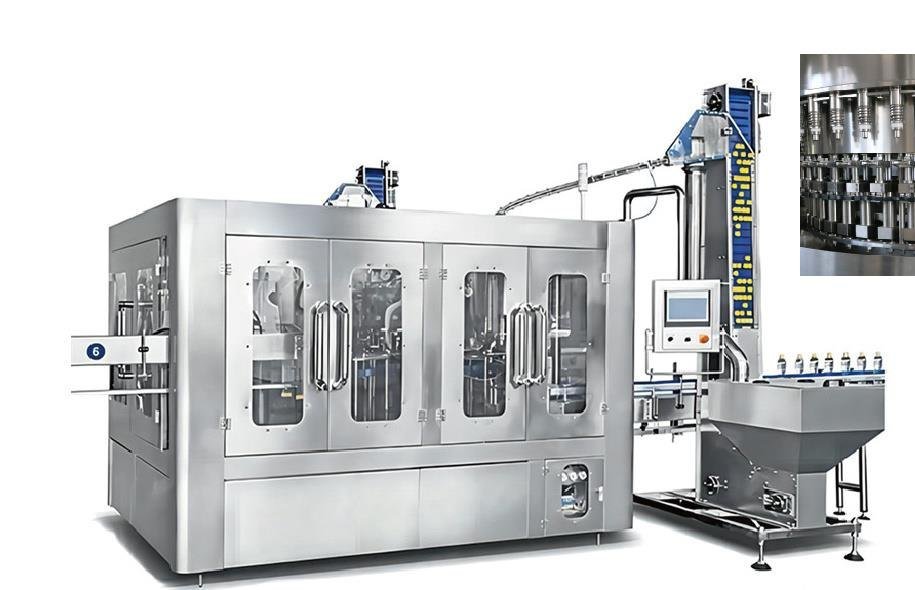
3-in-1 Bottled Water Filling Machine

A 3-in-1 bottled-water filling machine transfers PET bottles through rinsing, normal-pressure filling and capping inside one synchronized monoblock. Selection still depends on the approved bottle, neck, cap, target BPH and connected equipment.

Answer first

Choose a 3-in-1 monoblock when the same PET bottle can be handled by neck through the three synchronized zones and the product is suitable still water. The machine reduces transfer points between separate rinsing, filling and capping machines, but it does not eliminate the need to define infeed, product-water, cap and outfeed interfaces.

01

Suitable for

Projects that match this page decision

  • Still purified, mineral or spring water in PET or suitable plastic bottles
  • Commercial small-format bottles with a confirmed neck finish and screw cap
  • Projects that can provide bottle and cap samples before final design
02

Not suitable for

Boundaries that need a different platform or review

  • Carbonated drinks that require an isobaric filling platform
  • Juice or tea processes that require hot filling or product-specific treatment
  • 18.9 L or 20 L returnable barrels, glass bottles or cans
03

Inputs required

Evidence to provide before confirmation

  • Bottle volume, height, diameter, neck drawing and empty-bottle sample
  • Cap type, diameter, height, material and cap sample
  • Required saleable output, reference bottle and expected operating hours
  • Product-water supply, air-conveyor entry, outfeed direction, voltage and space
04

Machine function

What happens at this machine or decision boundary

  • The rinser grips the neck, inverts the bottle, applies rinse water and drains it before transfer.
  • The filling zone receives treated product water and fills under the confirmed still-water operating principle.
  • The cap system sorts, conveys, places and tightens the approved closure before the bottle leaves the monoblock.
05

Configuration decisions

Options that must appear in the proposal

  • Station configuration and reference speed
  • Bottle-neck handling and change-part scope
  • Cap feeder, sorter and capping-head arrangement
  • Included guards, tanks, pumps, piping and transfer sections
06

Interface requirements

Upstream, downstream and utility handovers

  • Air conveyor must present stable bottles at the agreed height and direction.
  • Product-water conditions at the machine boundary must be defined in the proposal.
  • Outfeed must transfer filled bottles without back-pressure damage or unstable accumulation.
07

Buyer risks

Questions to close before order

  • Buying from a model name alone without comparing the actual scope
  • Applying a 500 ml catalog speed to 1.5 L or 2 L bottles
  • Assuming every neck finish and cap will work without samples or drawings
08

FAT checks

How to verify the agreed basis

  • Run the approved bottle and cap for an agreed continuous period.
  • Record actual output, rejected bottles, fill-level variation, leakage and cap results.
  • Check alarm, stop, restart and no-bottle/no-cap logic at the defined interfaces.
09

Quotation scope

What the commercial offer should state

  • Rinsing, filling and capping station counts
  • Reference container and output basis
  • Included infeed, cap handling, outfeed, tank, piping and controls
  • Change parts, spares, FAT method, documents and installation responsibility

Allot Tech / 3-in-1-bottled-water-filling-machine

Turn this decision into a comparable machine scope

Send the bottle, cap, reference output, existing equipment and destination. Final values are confirmed in the project proposal.

Submission is sent to sales@allottech.com. Personal form values are not sent to Google Analytics.