Skip to content
PET STILL-WATER MACHINE SELECTION DESK US+1 818 262 0958
Allot TechFilling machine center

High-intent buyer search / machine-specific planning

How a 3-in-1 Water Filling Machine Works

Follow PET bottles from infeed through rinsing, normal-pressure filling, capping and discharge. See what to verify before selecting a still-water monoblock.

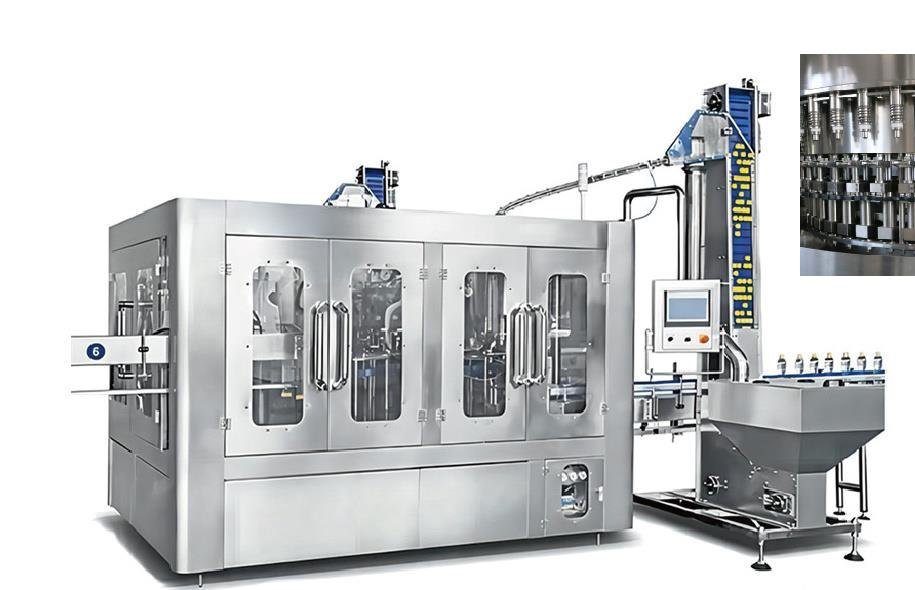
PET bottle rinsing, water filling and capping monoblock shown in the Allot Tech catalog
Allot Tech 2026 catalog · reference equipmentReference values require project-specific confirmation.
Answer first

Empty PET bottles enter the monoblock, are rinsed and drained, filled with still water, capped and discharged. Bottle transfers connect the three operating zones; the approved bottle, cap, water supply and controls determine the project configuration.

From empty bottle to closed bottle

  1. Bottle infeed and transfer

    What happensThe reference arrangement brings empty PET bottles from an air conveyor into the machine's bottle-transfer system.

    What to confirmApproved neck/support-ring geometry, guides, transfer parts, entry height and direction. Define who supplies the air conveyor.

  2. Rinsing and draining

    What happensBottles pass through the rinsing section and drain before transfer to filling.

    What to confirmRinse method, medium quality, contact conditions and drainage. Confirm hygiene verification separately; rinsing is not a sterility claim.

  3. Normal-pressure water filling

    What happensStill water is delivered to the filling section, where the approved bottle is filled before the next transfer.

    What to confirmProduct-water handover, tank/pump/piping scope, fill-level or volume criteria and output for the actual bottle. Do not substitute a carbonated or hot-fill process.

  4. Cap delivery and closing

    What happensApproved caps reach the capper and are applied to the filled bottles.

    What to confirmCap drawing and samples, cap-feed scope, closing adjustment, leak/closure checks and agreed acceptance limits.

  5. Discharge and coordinated flow

    What happensClosed bottles leave for the outfeed conveyor. Infeed and discharge conditions affect machine operation.

    What to confirmExit height/direction, conveyor responsibility and documented stop/restart signal behavior. Verify transfers and filled bottles during the agreed machine FAT.

Process overview based on the Allot Tech Beverage Bottling Catalog 2026, pages 6–10, and the PET still-water reference application. Final mechanisms, settings and acceptance limits belong in the approved proposal. This is not an operating or maintenance manual; use trained personnel and the approved safety procedures.

01

Suitable for

Projects that match this page decision

  • Buyers learning how a PET still-water rinse-fill-cap monoblock operates
  • PET still-water projects preparing a controlled machine requirement
  • Buyers able to confirm bottle, cap, output basis and destination
02

Not suitable for

Boundaries that need a different platform or review

  • Applying the same working principle to carbonated pressure filling or hot-fill equipment
  • Carbonated, hot-fill, glass, can or returnable 5-gallon platforms
  • Treating a search phrase or nominal BPH as a final machine guarantee
03

Inputs required

Evidence to provide before confirmation

  • Bottle neck geometry, rinse requirement, product-water condition, cap and target output
  • Approved bottle drawing, neck finish, cap drawing and representative samples
  • Saleable daily demand, net production hours, efficiency basis and destination
04

Machine function

What happens at this machine or decision boundary

  • Synchronized transfers move the bottle through rinsing, filling and capping without separate standalone machines.
  • The rinse-fill-cap platform is reviewed against the approved PET container and still-water process.
  • Project engineering confirms the model, components, interfaces and acceptance basis.
05

Configuration decisions

Options that must appear in the proposal

  • Rinse method, filling method, valve count, cap handling, bottle transfer and control logic
  • Machine-only, machine-plus-interface or complete-line commercial boundary
  • Change parts, controls, documents, spares, FAT and service responsibility
06

Interface requirements

Upstream, downstream and utility handovers

  • Air conveyor entry, product-water tank and piping, cap elevator and filled-bottle outfeed
  • Treated product-water, electrical, controls and drainage handovers
  • Filled-bottle discharge, downstream accumulation, labeling and packing route
07

Buyer risks

Questions to close before order

  • Focusing on three station names while ignoring the transfers and utility boundaries between them
  • Comparing supplier proposals built on different container or efficiency assumptions
  • Leaving exclusions, utilities, installation or acceptance evidence unstated
08

FAT checks

How to verify the agreed basis

  • Observe every transfer, rinse action, filling cycle, cap feed and discharge under production conditions.
  • Run approved production-representative bottles and caps under a written test method.
  • Record output, stops, transfer, fill level, leakage, capping, alarms and open points.
09

Quotation scope

What the commercial offer should state

  • Describe each station, transfer, included auxiliary and interface responsibility.
  • Reference output basis, included interfaces, change parts, spares and documents
  • FAT, packing, freight, installation, commissioning, exclusions and confirmation items

Questions to settle before requesting a quote

What is the operating sequence of a 3-in-1 water filler?

Empty PET bottles enter the monoblock, are rinsed and drained, filled with still water, capped and discharged. Bottle transfers connect the three operating zones; the approved bottle, cap, water supply and controls determine the project configuration.

Does the rinsing stage prove that a bottle is sterile?

No. Rinsing alone is not evidence of validated sterilization. Specify the rinse medium, its quality, contact conditions, drainage and required hygiene verification with the supplier. Do not treat a catalog description or machine photograph as a validated sanitation process.

Why must the process be checked after changing bottle size?

Bottle geometry, neck handling, guides, change parts, filling settings and cap delivery may differ by format. Agree approved samples and trials for each SKU, including fill/cap checks and output basis. A successful 500 ml run does not automatically validate a larger bottle.

Allot Tech / 3-in-1-water-filling-machine-working-principle

Turn this decision into a comparable machine scope

Send the bottle, cap, reference output, existing equipment and destination. Final values are confirmed in the project proposal.

Mr Kcal
Allot Tech (Suzhou) Co., Ltd.

Submission is sent to sales@allottech.com. Personal form values are not sent to Google Analytics.